
































Most horses stop shedding the bacteria within about 6 weeks of clinical signs resolving.9 However, 1 in 10 become "persistent carriers" that shed intermittently for months or years with no outward symptoms.9 Your vet may recommend a guttural pouch wash of a visually recovered horse before declaring it clear of strangles.9
It can be easy to think that strangles won’t impact your yard, but outbreaks are happening frequently across the UK.1 Given the majority of outbreaks happen when a new horse is introduced to a yard, owners should be highly vigilant for the signs of strangles when new horses arrive.2
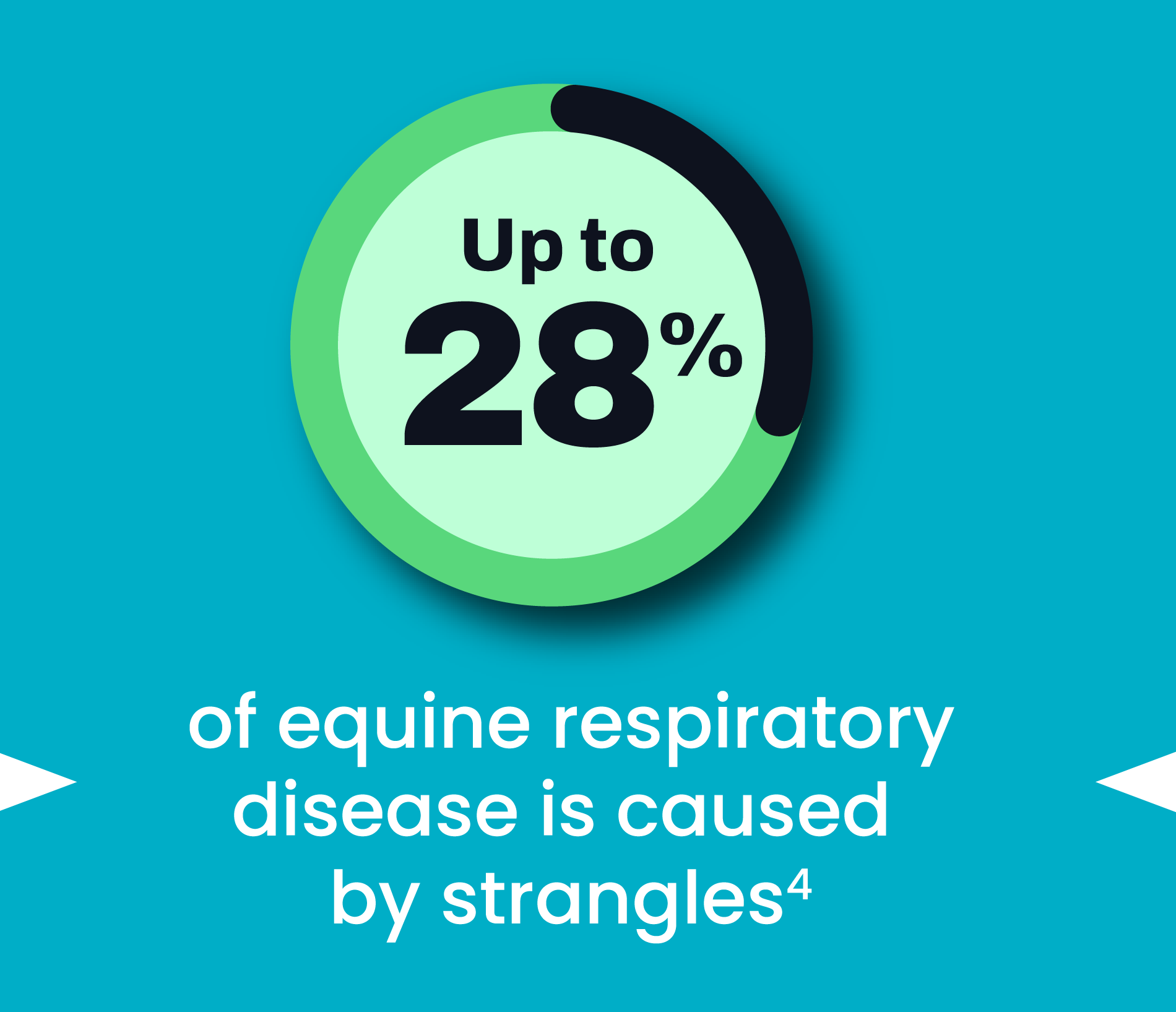
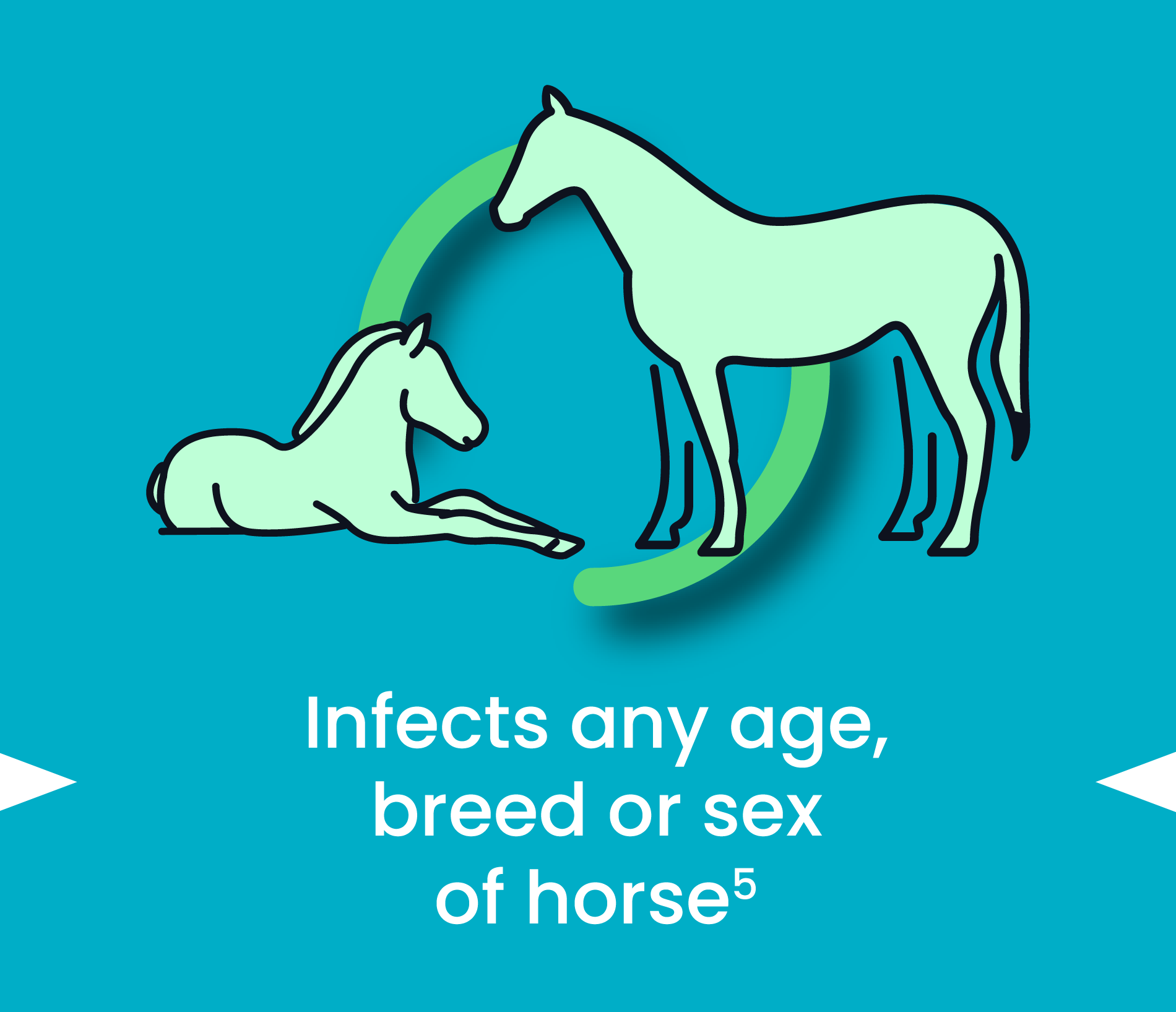

Strangles can affect any age, sex or breed of horse5
Strangles mythbuster

Strangles only infects
young horses

This is a common myth. Strangles can affect any age,
sex or breed of horse.5 Whilst strangles often affects
younger horses more severely due to their naive
immune systems, horses of any age can become
infected. Indeed, in the UK the median age of infection
is 8 years old,7 likely because these horses are actively
competing and travelling regularly.3
Which horses are most likely to spread strangles?
Recent research suggests that horses that have had a clinical strangles infection but appear visually to have recovered from strangles, are the main source of strangles outbreaks.2 These recently convalesced subclinical short-term carrier horses frequently pass on the disease when they are introduced to a new stable.2
Yards that have new horses arriving, regularly travelling for training or mixing at shows and events are at higher risk.3 It is advisable to isolate a new horse for 2 to 3 weeks upon arrival, to allow signs of an infection to appear.8




Perform a risk assessment to better understand the likelihood of strangles transmission in your yard8
FAQs – Your questions answered
How long is a horse contagious? add
Can a horse carry strangles without showing symptoms? add
Yes. Carrier horses (silently harbouring the bacteria in their guttural pouches) look completely healthy but can trigger new outbreaks.2 Your vet may recommend a guttural pouch wash to identify carrier horses.
How long should a new arrival be isolated? add
Current guidance recommends isolating a new arrival for a minimum of 3 weeks, since a horse could be incubating the disease on arrival.8
Can people, not just horses, bring strangles onto a yard? add
Yes. Hands, clothing, boots, and equipment can carry the bacteria between yards, particularly for people who visit multiple premises in a day. This is especially a problem on yards without hand-washing stations or a clean boots/clothes policy for visitors.3,8
References add
-
SES 27/06/25 – 26/06/26. Available at: https://app.jshiny.com/jdata/ses/sesview/ (Accessed July 2026).
-
McGlennon A. et al. Equine Vet J. 2025; 58(2): 533-548. doi: 10.1111/evj.14558
-
Rendle D, et al. Equine Vet Educ 2025;37:90–97.
-
National Equine Health Survey (NEHS) 2018. Available at: https://www.bluecross.org.uk/sites/default/files/d8/2022-01/NEHS-results-2018.pdf (Accessed July 2026).
-
National Equine Welfare Council. Available at: https://newc.co.uk/advice_articles/strangles/ (Accessed July 2026).
-
Equine Infectious Disease Surveillance. Available at: https://equinesurveillance.org (Accessed July 2026).
-
McGlennon A, et al. Vet Rec. 2021;e948. https://doi.org/10.1002/vetr.948.
-
Ivens, P. Vet Times. Available at: https://www.vettimes.co.uk/app/uploads/wp-post-to-pdf-enhanced-cache/1/implementing-biosecurity-in-an-equine-environment.pdf (Accessed July 2026).
-
Boyle et al. J Vet Intern Med. 2018;32:633-647.