



































STRANGLES IS HIGHLY CONTAGIOUS1
KNOW THE SIGNS AND HOW IT SPREADS

Strangles is equine specific.2 Caused by the bacterium S. equi, the first sign of infection is a fever, before leading to the formation of abscesses in the lymph nodes of the head and neck.1,3 Some animals will show only mild symptoms, while some others may become very sick.1 The mortality rate is up to 10%.1,2

It is therefore vital you know the signs and how it spreads, so you can minimise the impact strangles could have on your horses and yard.2,4


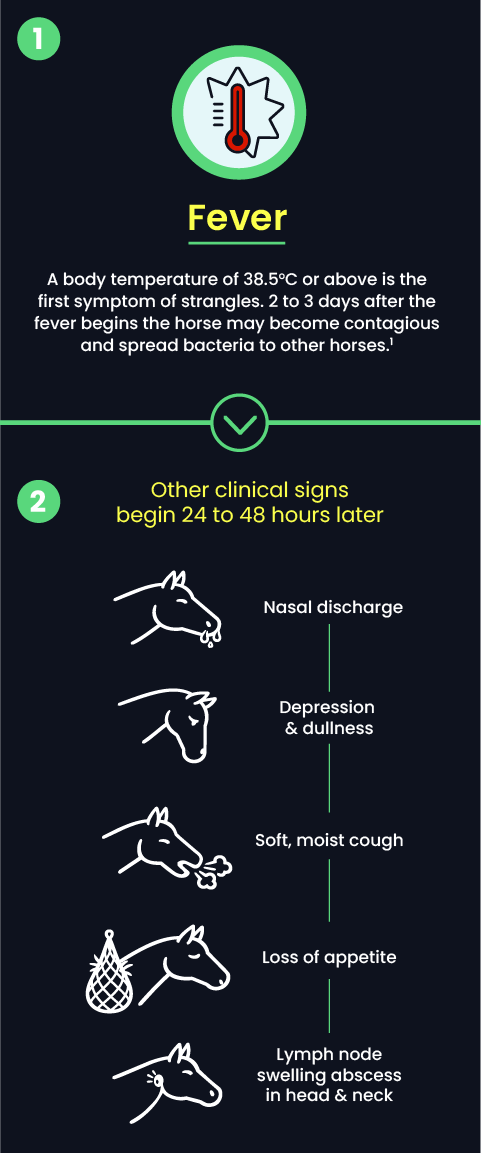
Fever is the first sign of strangles1

Understanding strangles clinical signs

When a horse develops a fever, it is time to act.2,6
While strangles is being confirmed,
put biosecurity measures in place
and discuss vaccination with your vet.4


How does strangles spread?

Strangles mythbuster
Myth

Strangles only spreads
via direct contact
between horses.

Fact

While strangles can pass from horse to horse by
direct contact, it also spreads indirectly via water
troughs or contaminated equipment, for example.1,4
This is why biosecurity measures and vaccination
are so vital in the face of an outbreak.1,4


Routes of infection

Direct contact

Illustration showing direct contact between two horses

Horses touching noses is a common route of infection.1 It is therefore important to keep infected horses away from other horses during an outbreak.1,4

Indirect contact

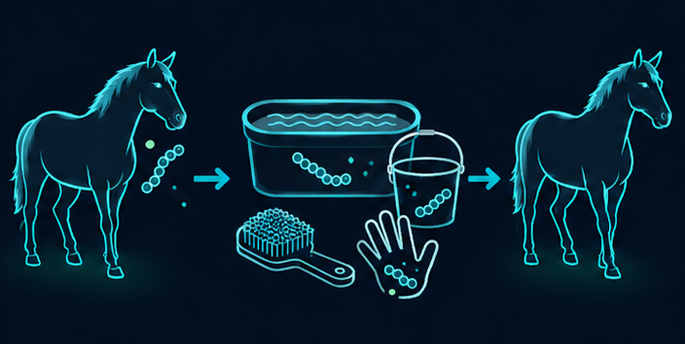
Illustration showing indirect transmission of strangles

Contamination of the environment and equipment such as grooming kits, tack, feed, transport and even handler’s clothing or hands can all act as sources of transmission.1 Water troughs are also a common source of infection, with strangles bacteria able to survive for over 1 month in water.1 It is therefore important nothing is shared between infected and uninfected horses during an outbreak.1,4

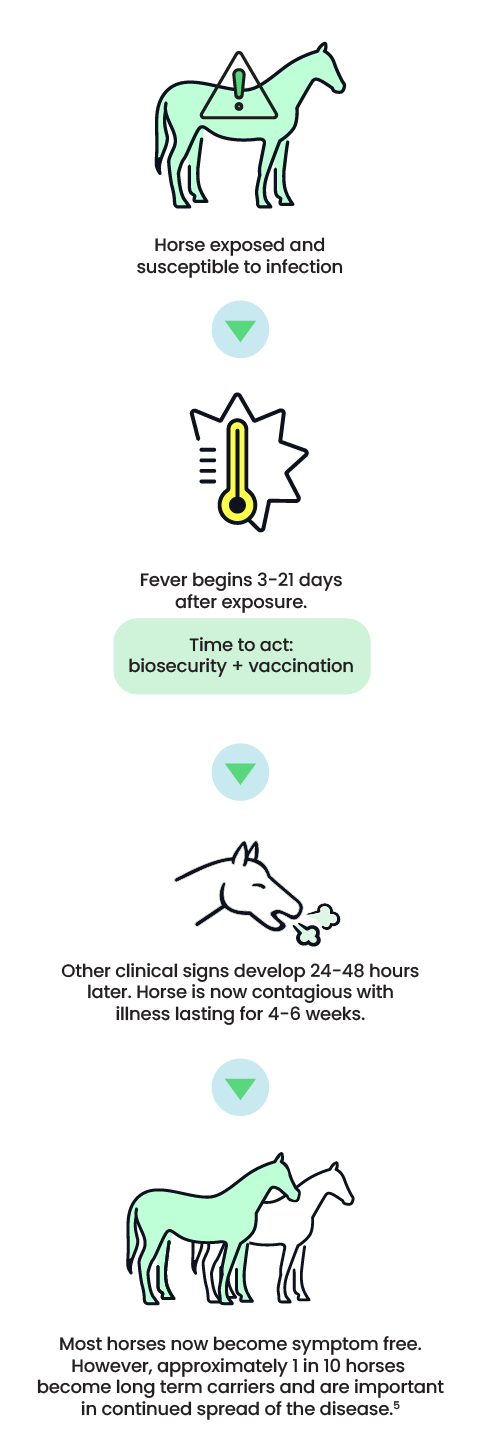
How strangles progresses in a horse1,4,6

How strangles progresses, from exposure through fever and clinical signs to long term carriers
 

What happens when horses are infected with strangles?

Strangles can spread quickly and easily between 
horses, so act fast with biosecurity measures 
and vaccination to stop the spread.1,4


FAQs – Your questions answered

First sign:2,6

  • Fever (body temperature >38.5oC)

Other signs:2,6

  • Nasal discharge
  • Soft, moist cough
  • Depression
  • Inappetence
  • Abscessation of the lymph nodes in the head and neck (and other body sites in rare cases)
  • Respiratory noises due to impeded airflow

All horses have two guttural pouches, one either side of the head.6 When S. equi enters the guttural pouch during disease, it remains here in approximately 10% of recovered horses.1 These ‘carriers’ look healthy, but can also spread strangles to other horses.5

  1. Boyle et al. J Vet Intern Med. 2018;32:633-647.

  2. Rask E, et al. Animals (Basel). 2025;15(24):3584

  3. Gröndahl G, et al. Equine Vet J. 2025: doi: 10.1111/evj.70125 (Online ahead of print).

  4. Rendle D, et al. Equine Vet Educ 2025;37:90–97.

  5. McGlennon A. et al.  Equine Vet J. 2025; 58(2): 533-548. doi: 10.1111/evj.14558

  6. British Horse Society. Available at: https://www.bhs.org.uk/horse-care-and-welfare/health-care-management/horse-health/equine-diseases/strangles/ (Accessed July 2026).

keyboard_arrow_up